Balanced Architecture
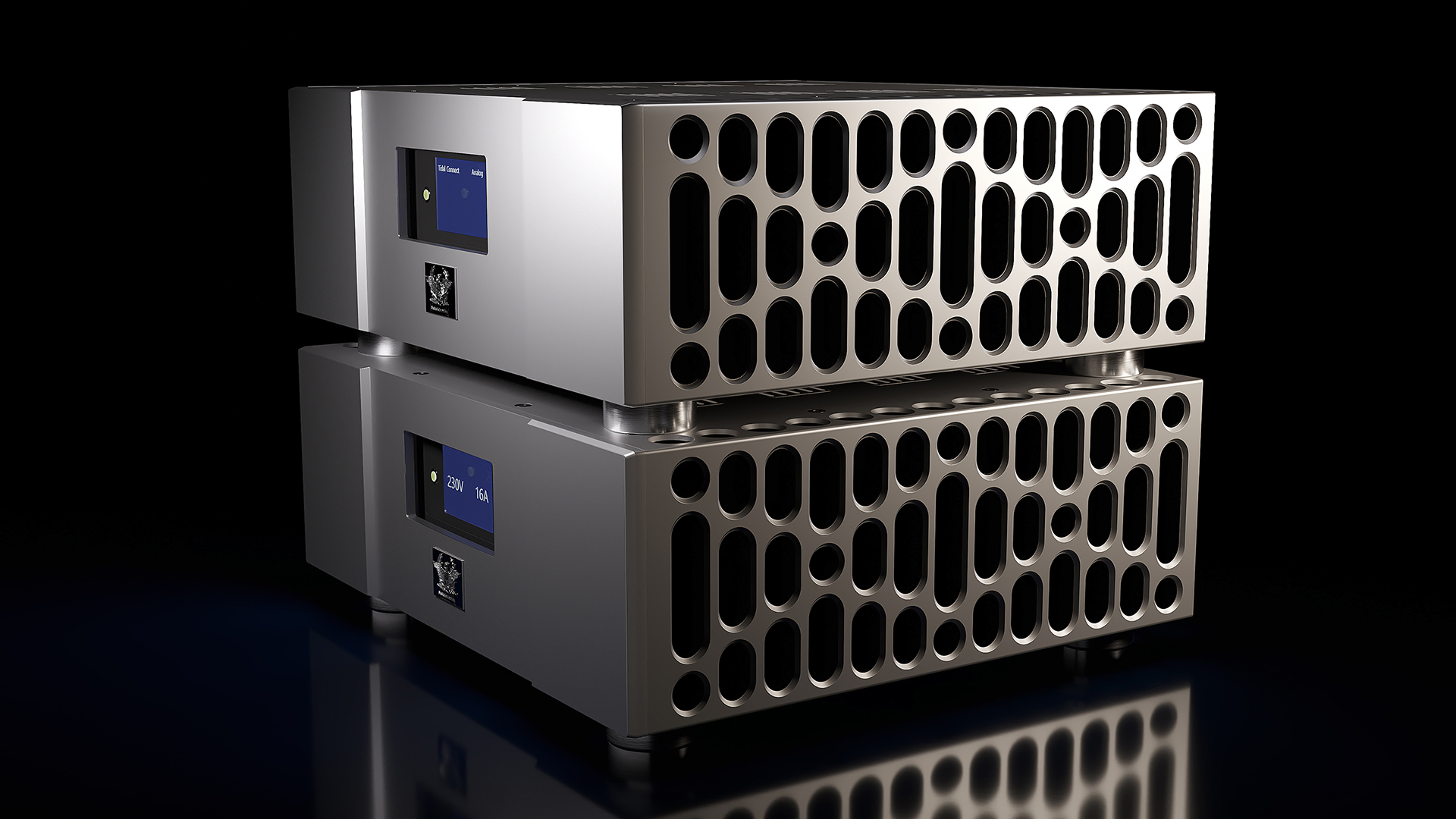
The most advanced DAC in the world to date, built on a Linux platform with an analog balanced transformer output.
The signal paths and point-to-point connections use hand forged 24K gold and hand-forged solid 999+ silver wiring.
EMI protection technologies include forged copper-gold alloy enclosures.
Protective structures are made from pressed aerospace-grade aluminum with honeycomb walling.
An LC-corrective binary module enables useful voltage correlation, built using Raytheon’s GaN MMIC technology.
Coil 24K Gold is used for smoothing filtration.
Dipole mono modules operating in stereo mode generate exceptionally stable balanced working currents.
The system calculates the accurate original signal’s discrete sampling along its entire path from input to output implemented using the Monarch (SAS) core.
Output: Symmetrical transformer core made from a hand-forged solid 999+ silver.
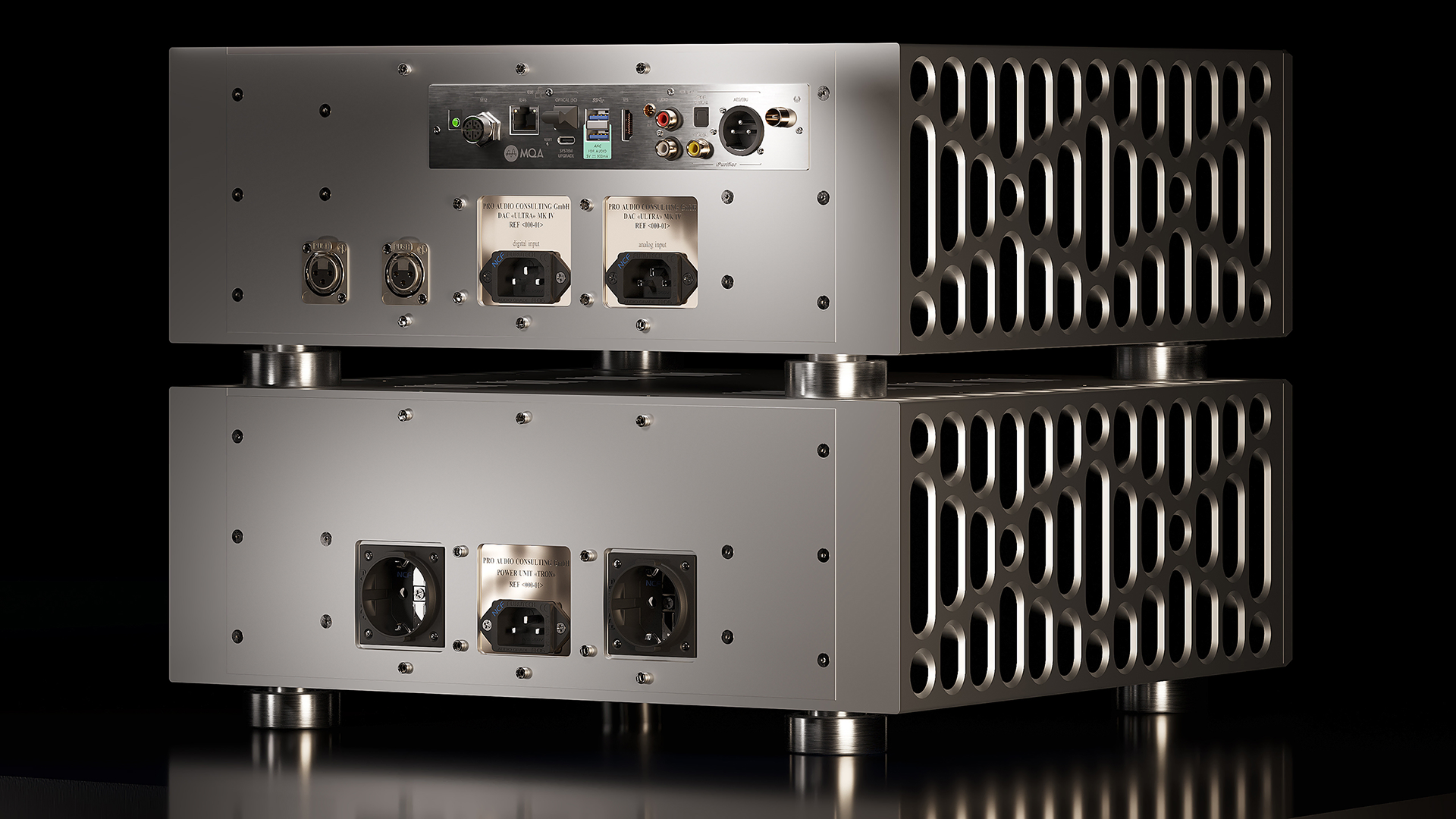
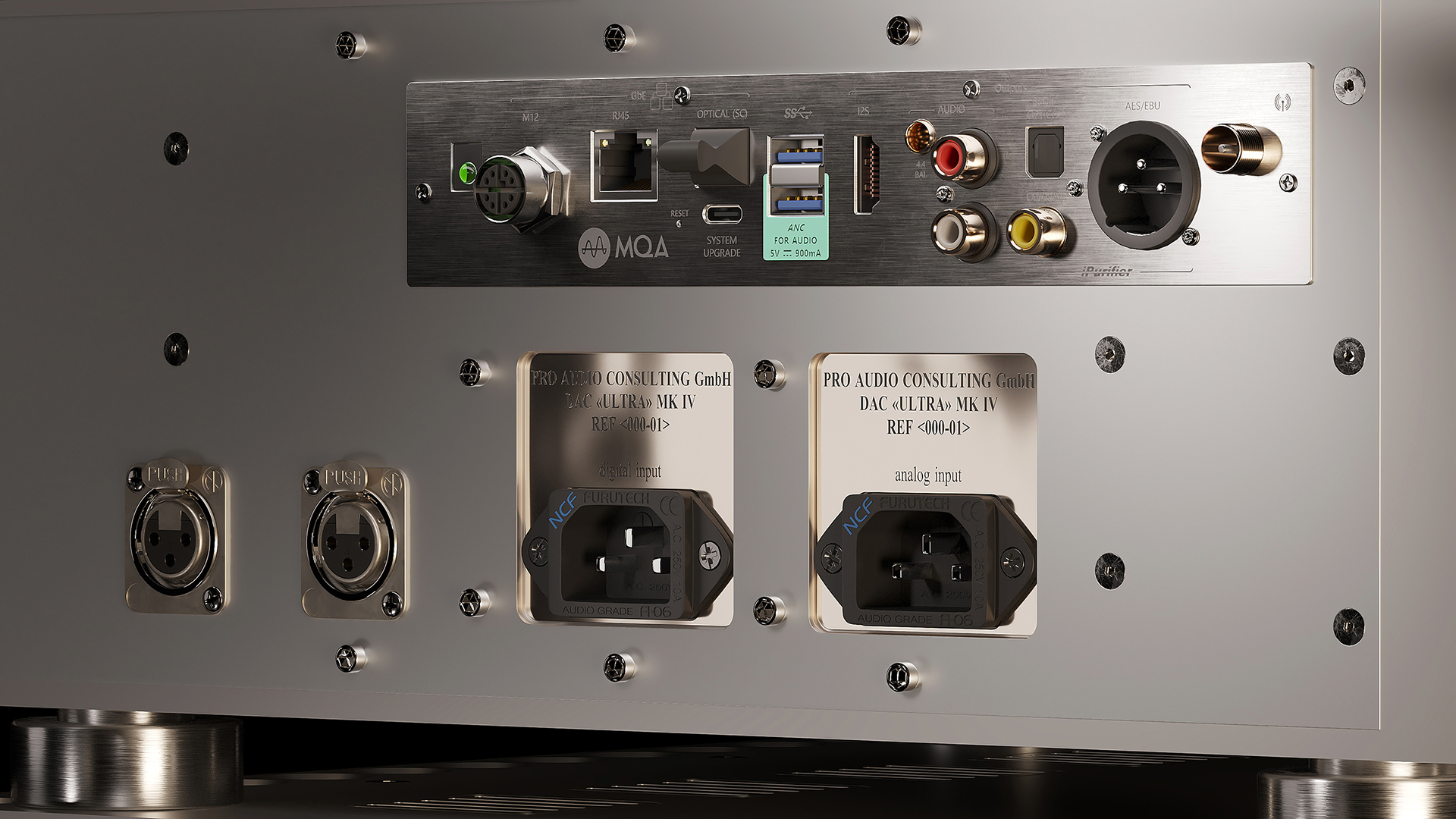
Input and Output: Signal connects via spring-loaded TR adapters in hand-forged solid 24K gold.
The power supply runs on a shared ground loop.
It’s split into two-section platforms, each featuring an input choke-transformer made with hand-forged solid 999+ silver conductors.
The first TR stage includes three windings with direct ground coupling.
A galvanic bridge between working windings isolates all electromagnetic fields from active signal chains.
The second TR stage is dual-level and powers both digital and analog paths of the DAC’s control unit.
All connections use solid 24K gold wire.
Key DAC Module Features:
The DAC uses rod-type vacuum tubes developed by British military R&D, which surpass traditional mesh-grid tubes in efficiency, frequency range, noise performance, low-voltage operation, and resistance to mechanical and radiation stress.
Advantages include instant activation, cold operation, virtual lifespan, and immunity to high-frequency magnetic fields.
PCM and DSD chips operate on separate channels and maintain bit-true integrity up to analog conversion. For DSD,
there’s no conversion to PCM or use of multi-bit processing.
Network signal from the router is regenerated, re-clocked, and balanced via OptiBox, with true galvanic isolation offering zero parasitic capacitance and inductance.
Internal Digital Stream Correction Modes
ANS2: Active second-order noise suppression system.
Voltage regulators feature:
Synchronous high-speed power controller operating at 1.2 MHz for enhanced filtering efficiency
Resulting in ultra-low noise performance.
Industrial-grade M12 input for ultra-high-speed system transmission-comparable to high-speed LAN.
Power Supply Module Highlights
Failure containment design ensures that a fault in one functional unit does not propagate to others (blocks 1–2–3 architecture).
Transceiver ICs are used to interconnect DAC modules and are potential vectors for critical fault propagation.
When a transceiver’s supply voltage exceeds its absolute rating, catastrophic failure is likely. This can result in high voltage appearing on the transmitter’s output pins and affecting the corresponding receiver.
Such high voltage can exceed what the receiver IC can tolerate, causing the fault to spread across the interface and affect adjacent modules.
Modern transceivers often have low-voltage internal architectures for high-speed data transmission, leaving little margin between operating and maximum safe input voltage.
For instance, the RHFLVDS31A from STMicroelectronics has a recommended supply voltage of 3.3V and an absolute maximum input of 4.8V.
At individual request, the following can be completed:
Tube device adapter for adjusting the frequency response for adaptive tuning of the output current of the efficient frequency response generation, which allows you to create coupling with any AMP. Frequency response correction carried out (as opposed to the tone block, which introduces distortion) by lowering or increasing the bass and treble current. Signal input and output to the TR made windings via hand-forged solid gold 24K spring adapters.
Dual mono – 8 833 USD.
At individual request, the following can be completed:
Tube device adapter for adjusting the frequency response for adaptive tuning of the output current of the efficient frequency response generation, which allows you to create coupling with any AMP. Frequency response correction carried out (as opposed to the tone block, which introduces distortion) by lowering or increasing the bass and treble current. Signal input and output to the TR made windings via hand-forged solid gold 24K spring adapters.
Dual mono – 8 833 USD.